A4 · 2026 · Open source
FleetDM & Penpot
Contributions to two large open-source products: Fleet, device management for IT and security teams, and Penpot, the open-source design tool.
- What I did
- Found the problems, scoped the fixes, got them through review: UI bugs, design-system cleanup, design tokens, an API field and its docs.
- Result
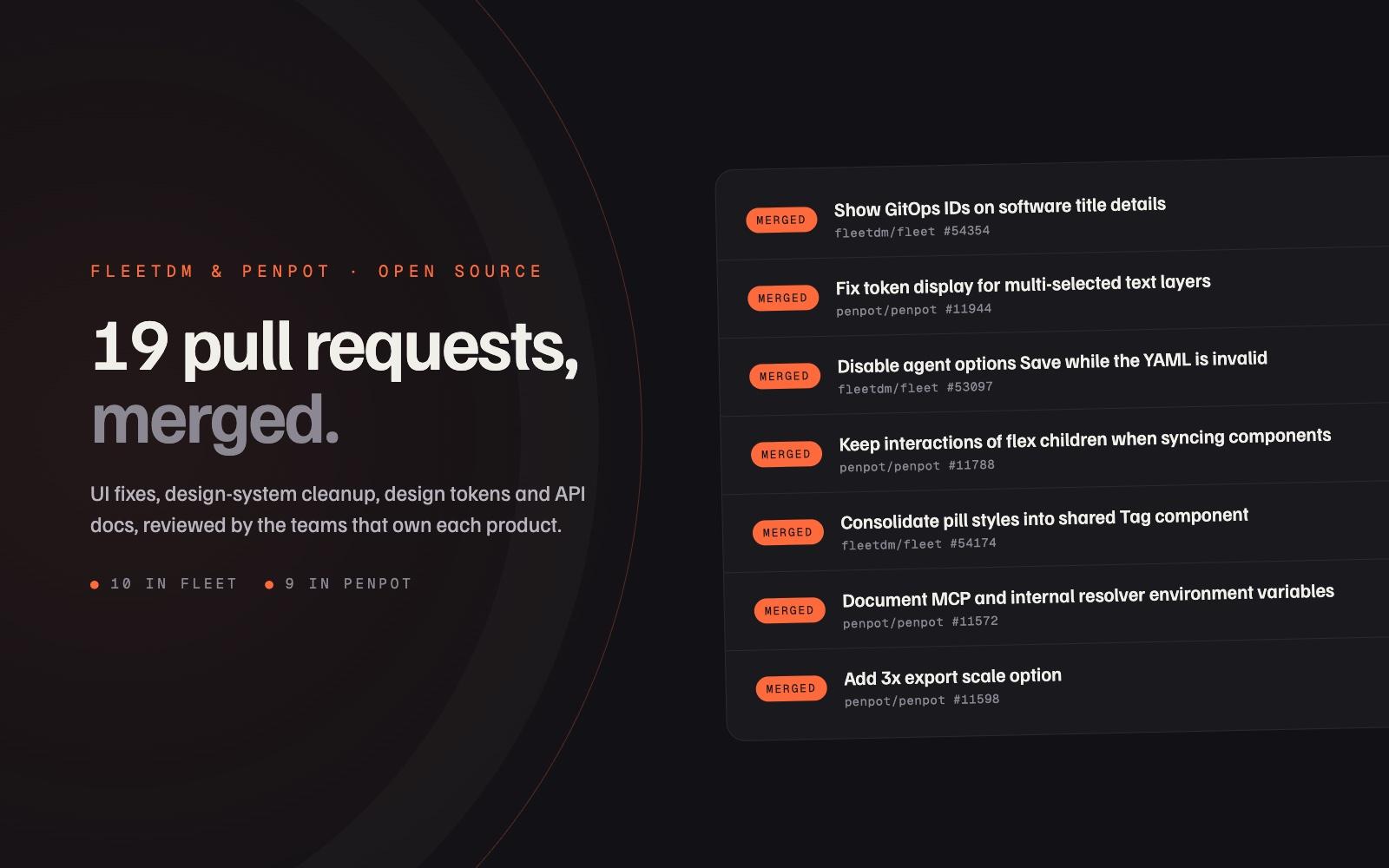
- 19 merged pull requests: 10 in Fleet, 9 in Penpot. Reviewed and merged by each team.
- Role
- Contributor: design, front end, docs
- Timeline
- 2026, ongoing
- Team
- Me, reviewed by the Fleet and Penpot maintainers
- Tools
- React, TypeScript, ClojureScript, Claude Code
Two products built for experts
Fleet is used by IT and security teams to manage thousands of laptops and phones. Penpot is a design tool, so its users are designers like me. Both are dense, technical products used all day by people who notice when something is slightly wrong, which is the kind of product I want to design.
Contributing means working to someone else's standard: their code review, their design system, their definition of done. Nothing merges because I think it is right.
AI writes most of the code in these pull requests, and each one says so. My part is finding the problem, deciding what the fix should be, reading the code it touches, and checking the result before a maintainer has to.
Fleet: screens for people who live in config files
- Show GitOps IDs on software title details. Teams that manage apps through GitOps need an app's slug or store ID, and the page did not show it. It now does, only when the title has one, with the same tooltip the rest of Fleet uses. The software title ID stays off the page because it is already in the URL. This also added a field to the API response.
- Document that field in the API reference. An API change is not finished until the docs show it, with an example.
- Disable Save while the agent YAML is invalid. A YAML syntax error made Save spin forever and send nothing. The page already showed the error; it just let you press Save anyway. Now it behaves the way Fleet's other settings pages already did.
- Consolidate pill styles into a shared Tag component. The same pill had been styled separately in several places and had drifted. One component replaced them.
Penpot: the tool designers use, from the inside
- Show token names for multi-selected text layers. Selecting two text layers that share a color token showed a raw hex value instead of the token's name. Text layers store fills differently from other shapes, so the token was dropped when the selection was merged.
- Keep interactions on component copies when syncing. Hiding a child inside a flex main component deleted the prototype interactions on every copy, and the loss was saved to the file.
- Put the "email already used" error on the input, not in a toast. The toast appeared while the field still looked valid, which read as if sign-up had worked.
- Document the MCP environment variables. Self-hosters could not find how to point Penpot at its MCP server, because the variables were used but never written down.
What this taught me
A design system shows its quality in the bugs, not the Figma file. The token bug and the component bug here were both invisible in a mockup and obvious to anyone using the product every day. Reading the code is how I found them.