B1 · 2025 · Behavioral design
Raahi
A voice companion for long-distance drivers that keeps them present, talks them into breaks at the right moment, and gives the passenger a way to help without nagging.
Read the full write-up on MediumResearch with taxi drivers, the behavioural framing, the driver and passenger flows, an MVP video, prototype testing.
Fifty drivers interviewed, a working interaction prototype on Arduino, tested with the drivers it was for. The fatigue sensing behind it was designed, not built.
Fifty drivers, and every one knew the risk
Long-distance taxi drivers experience highway hypnosis and fatigue leading to accidents, but routinely ignore loud alarms because stopping feels financially expensive.
Driver Interviews, Behavioral Design, Interaction Flows & Hardware Prototyping.
Designed a screenless voice companion with a tactile Arduino hardware unit that recommends breaks at moments of low financial cost rather than triggering alarms.
Interviewed 50 drivers, built a physical Arduino interaction prototype, and validated behavioral adoption directly with long-distance drivers.
Highway hypnosis occurs when a driver travels for miles on monotonous roads with zero recall of the journey. The surprising takeaway from interviewing 50 highway drivers was that they already knew the danger. They pushed through exhaustion because stopping meant losing fares.
“You arrive at your destination and realize you cannot remember the last 20 minutes of road. You know it is dangerous, but stopping feels like losing money.”
(Long-distance highway cab driver, Mumbai)
Hardware design: A companion on the dashboard
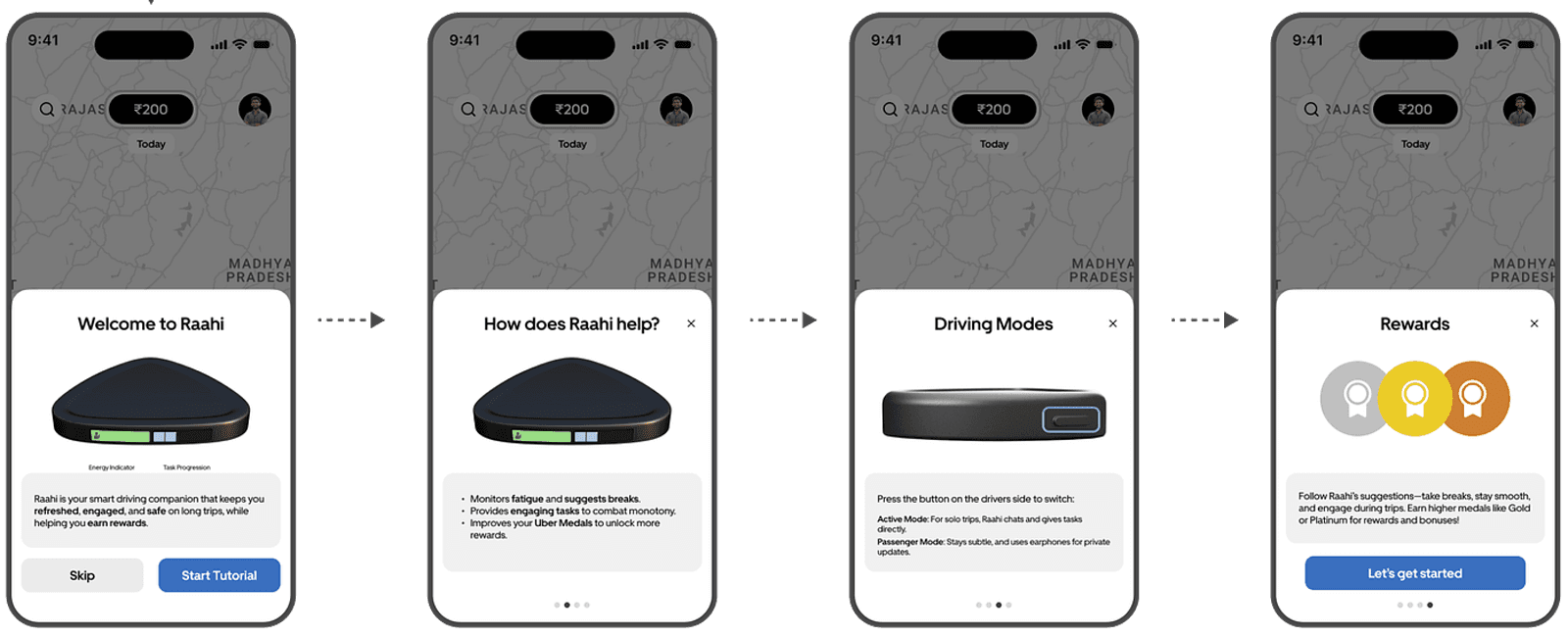
The Raahi hardware unit: Designed for peripheral vision with ambient LED status and oversized physical buttons that require zero visual distraction.
Fatigue Tracking
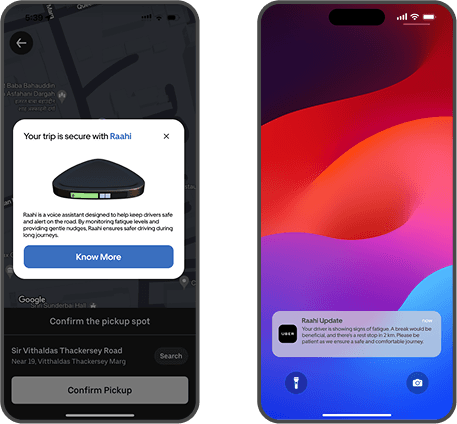
Monitors driver alertness continuously through conversational check-in latency and ambient HRV metrics.
Monotony-Breaking Games
Triggers screen-free cognitive prompts: Spot the Landmark, Lyric trivia, Memory puzzles, and Billboard counting.
Adaptive Driving Modes
Dynamically shifts audio style, prompt density, and tone between solo highway trips and passenger ride-alongs.
Smart Rest Suggestions
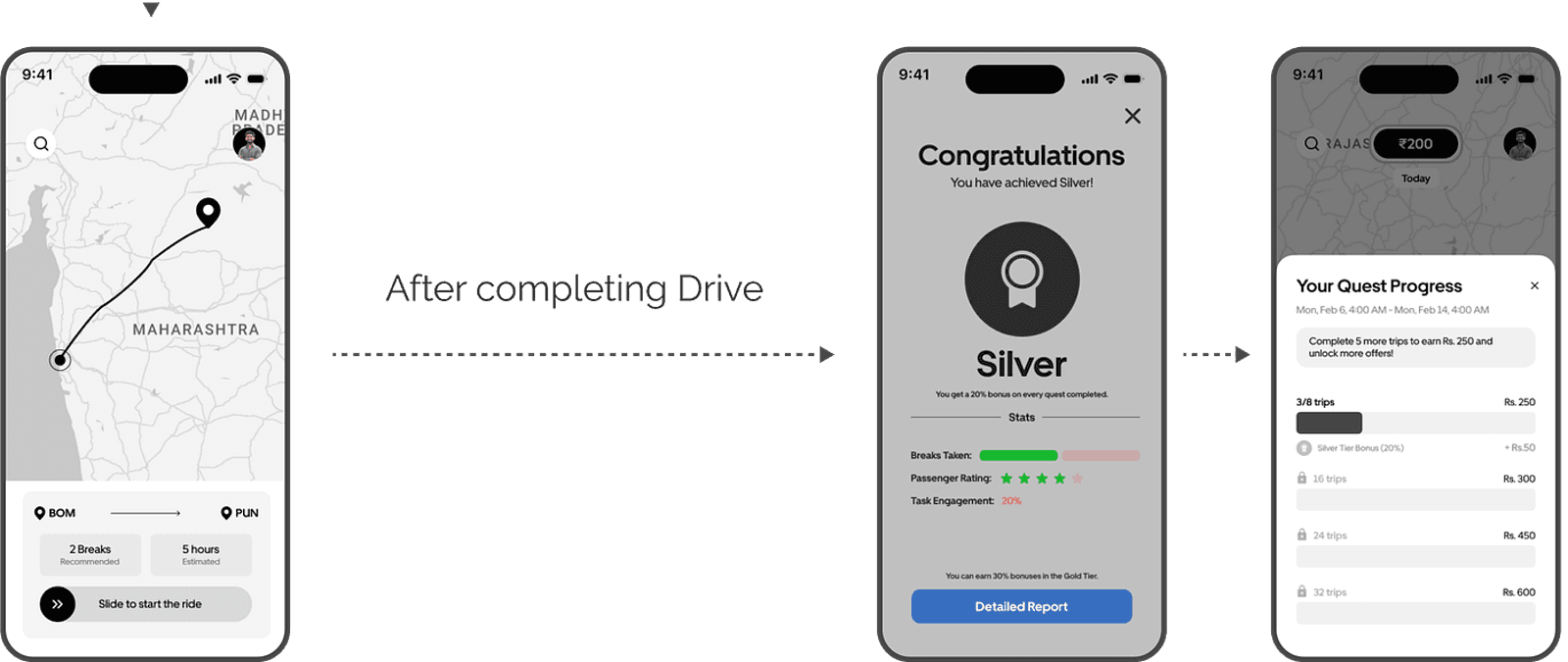
Recommends chai stalls and toll plaza breaks at the exact moment stopping carries the lowest perceived fare cost.
Partnered Rewards
Incentivizes break compliance with real economic value: discounted fuel, toll perks, and Uber medal tiers.
Hardware Connectivity
Operates standalone on 12V vehicle power while syncing journey logs with dashcams and the companion app.
Core behavioral decisions
A voice companion, not a screeching alarm
Instead of Loud sirens or aggressive steering wheel buzzers
Loud alarms treat the driver like a hazard to be reprimanded. Drivers instinctively swat or mute jarring alarms. Instead, Raahi speaks in conversational, localized language, triggering cognitive trivia, landmark games, and verbal replies to keep alertness active.
After Drivers engaged naturally in conversational check-ins rather than disabling the device.
Suggest breaks when stopping costs the least
Instead of Rigid timer-based mandatory stops every 2 hours
Drivers refuse to stop if they feel they are burning time on an open stretch. Raahi pairs upcoming fuel stops, toll plazas, and verified dhabas with specific break durations (e.g. "10-minute chai stop 3 km ahead will cost you zero fare loss").
After Drivers accepted rest recommendations when paired with nearby inexpensive tea stalls and toll plazas.
The companion mobile app & passenger mode
Prototype testing and takeaways
We built a functional Arduino hardware prototype loaded with MP3 audio playback and capacitive touch controls, testing it on simulated highway routes with taxi drivers.
- Key validation: Drivers confirmed that interactive conversational trivia kept them awake significantly longer than passive radio or silence.
- Academic presentation: Documented and published as an academic design research paper on behavioral ergonomics for Indian transport.