B2 · 2026 · Web
RERA Easy
A Maharashtra RERA consultancy lost its website, and with it the channel most of its leads came through. This is the site that put the firm back in front of the people looking for it.
Visit reraeasy.comDesign, front end and back end, in a week: three audiences, one site, and a CMS so the firm is never dark again.
Live at reraeasy.com in a week, built solo. Enquiries went up after launch. The firm edits its own compliance copy across twenty collections, with no deploy and no me.

The site went dark, and inbound leads halted
A premier real-estate compliance consultancy lost its website, instantly halting inbound sales leads and rendering 9 years of reputation invisible to search.
Product Design Engineer (Solo): UX/UI design, Next.js front-end, Payload CMS integration on Neon Postgres, and deployment in 1 week.
Placed verifiable trust metrics (7,000+ clients, 2017 foundation) ahead of service descriptions and built 3 isolated audience paths.
Site launched live at reraeasy.com in 1 week. Inbound developer enquiries immediately resumed, and the firm edits its own legal copy across 20 collections.
RERA Easy has handled MahaRERA compliance since 2017 for clients like DLF, Godrej, and Tata Realty. When their previous website was accidentally deleted with no backups, inbound sales stopped cold.
With a 1-week turnaround and no existing digital assets except a logo, I designed, built, and launched a multi-audience platform where the firm owns every piece of content.
Social Proof Hero
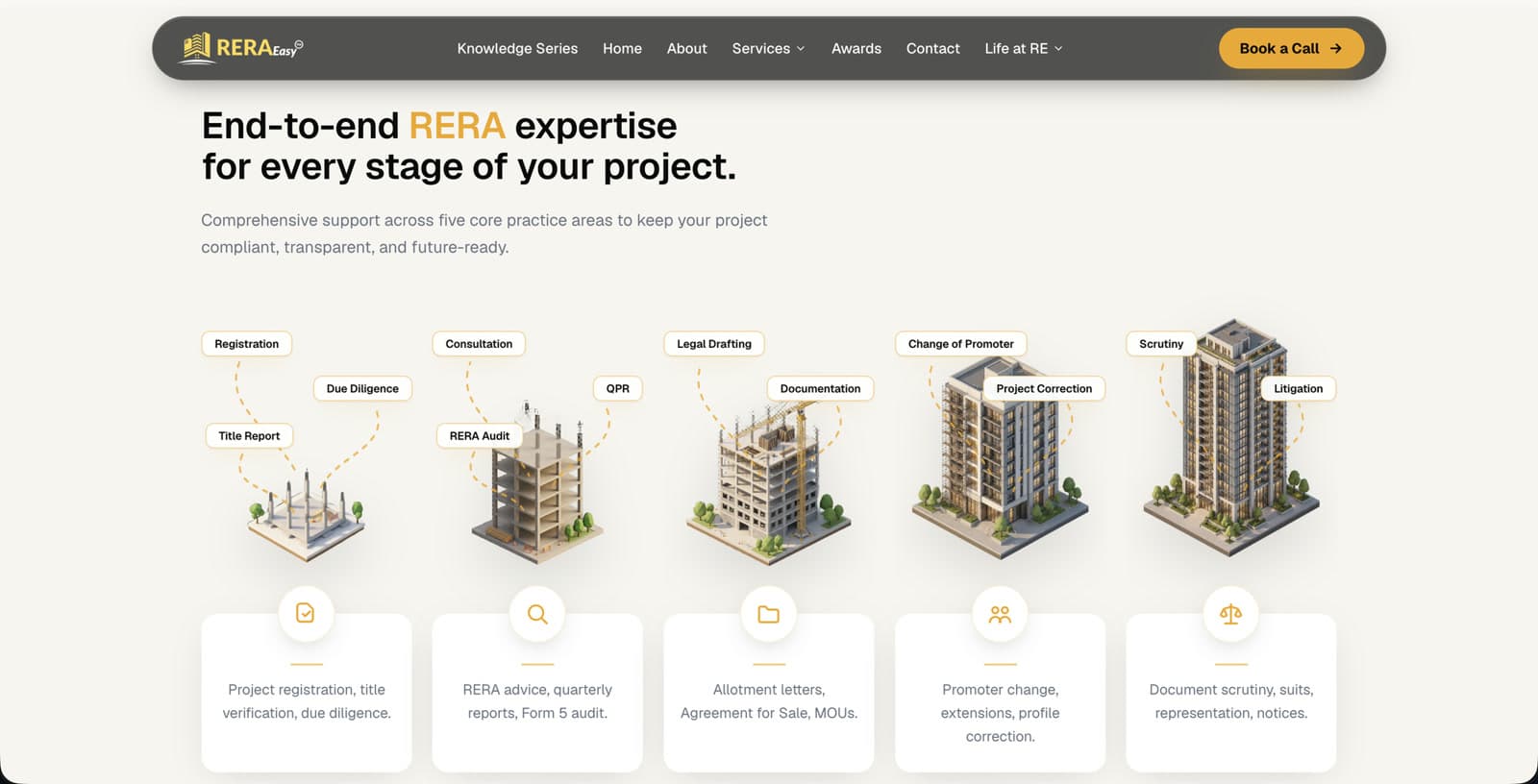
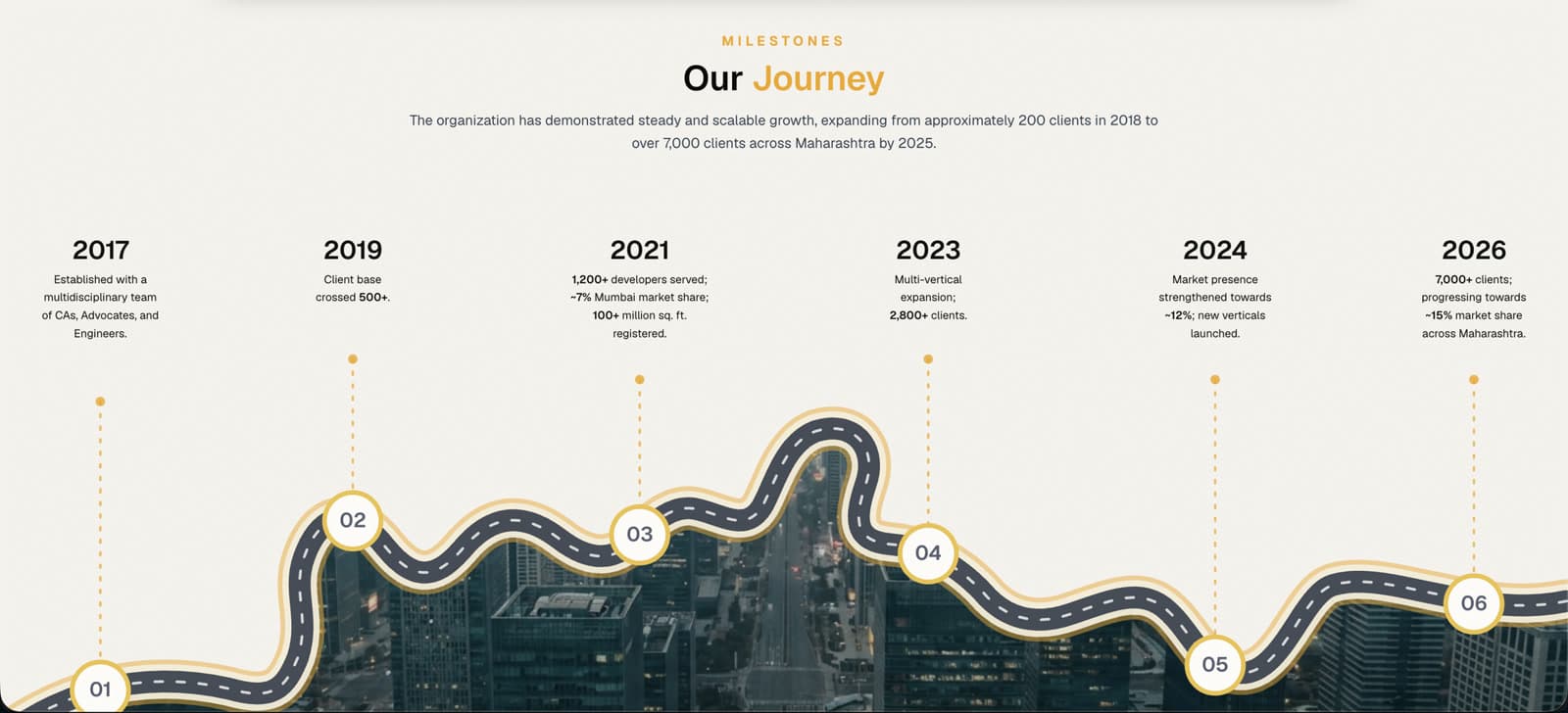
Hero opens with 2017 foundation, 7,000 clients, and 5,000 projects before listing complex legal services.
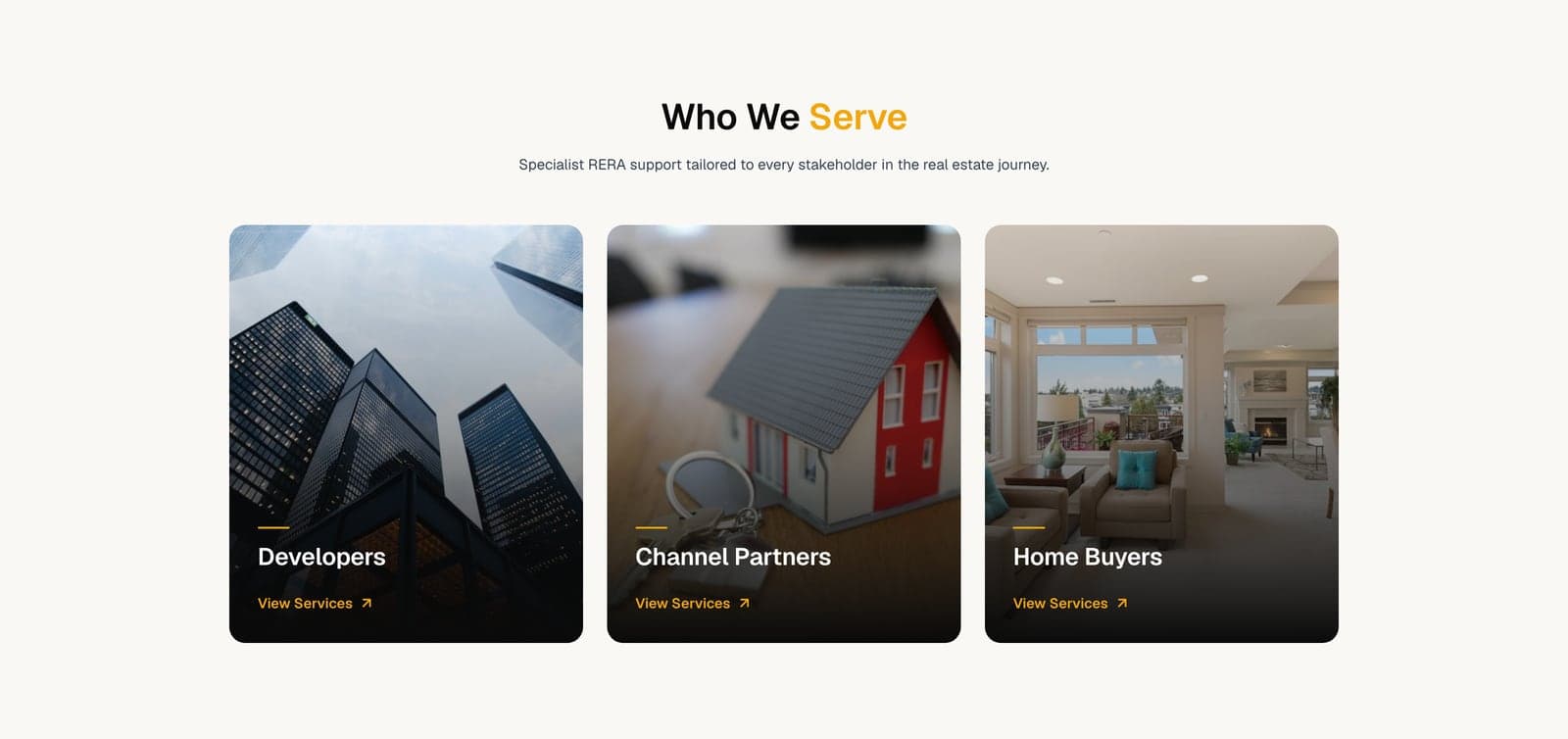
3 Audience Paths
Developers, Channel Partners, and Homebuyers reach tailored landing flows without cross-audience legal noise.
Payload on Neon
20 collections empower CAs and advocates to edit statutory compliance language live without code deploys.
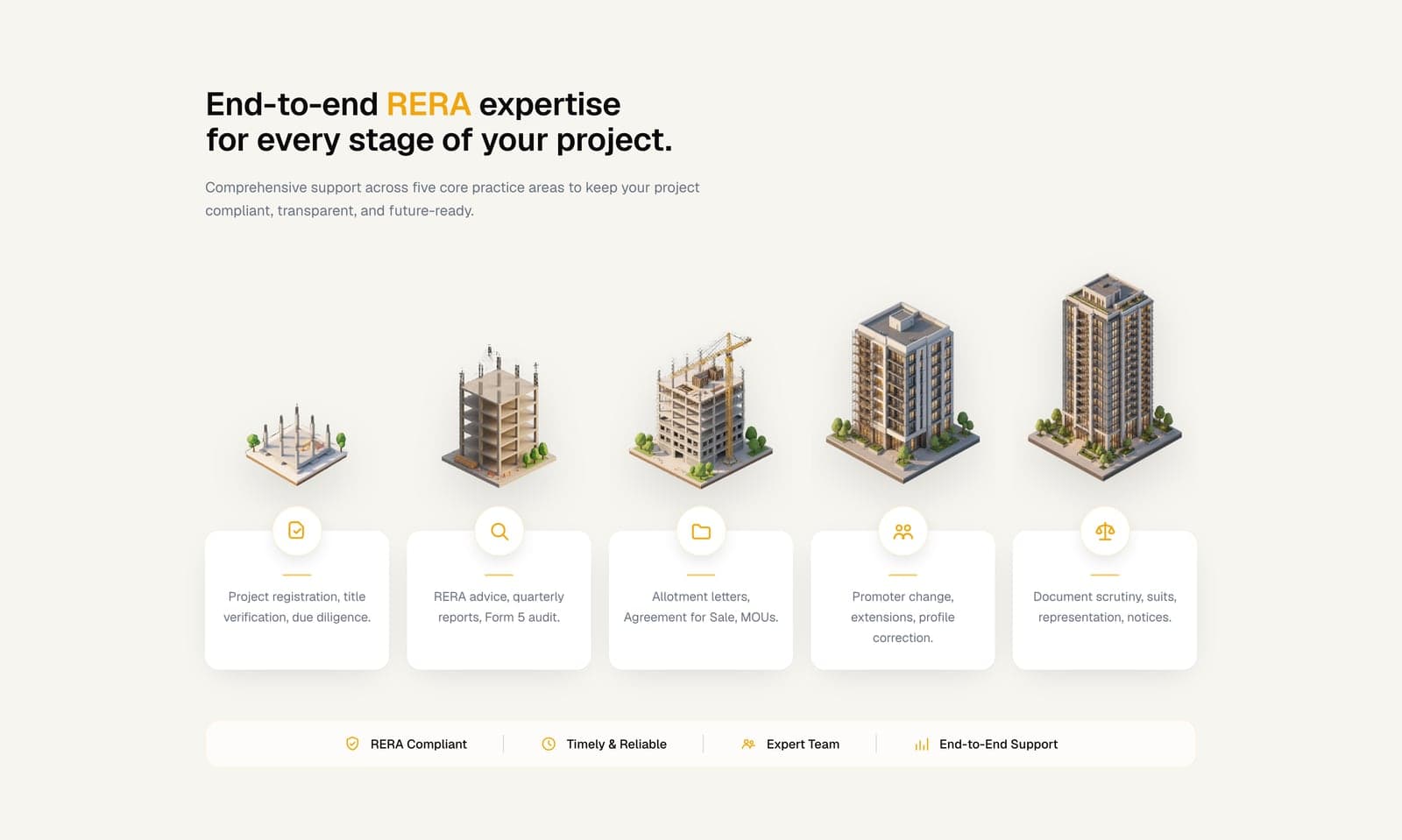
What each audience actually lands on


Key Design & Architecture Decisions
Answer 'Can you be trusted?' before selling statutory services
Instead of Opening with an encyclopedic list of RERA compliance services
Compliance filings carry heavy financial penalties when mishandled. Before reading service packages, prospective clients need immediate proof of legitimacy. Leading with verifiable metrics (7,000 clients, 5,000 projects, active since day one of MahaRERA in 2017) answers the risk question before asking for an enquiry.
After Inbound developer enquiries resumed immediately after launch.
Ship the revenue-generating pages in 7 days, defer the archive
Instead of Waiting to rebuild all historical blog posts and case archives before going live
Every offline day meant lost commercial leads. I scoped launch strictly to high-intent entry points: the homepage, 3 audience landing pages, statutory service guides, and localized city pages for regional search queries. Secondary content was scheduled for post-launch milestones.
After The firm was discoverable again in 7 days instead of 3 months.
Payload CMS on Neon: eliminate the agency bottleneck
Instead of Hardcoding compliance copy and requiring developer commits for edits
The previous website went offline because the firm had no ownership of their infrastructure. Rebuilding with Payload CMS backed by Neon Postgres decoupled content from code across 20 distinct collections. Because MahaRERA circulars change frequently, internal legal teams now update statutory wording directly.
After Advocates and CAs update regulatory filings independently with zero developer overhead.
Impact & Outcome
Inbound developer enquiries recovered immediately upon deployment. Legal and accounting teams now manage their own content operations without developer intervention.